
Kereru

 All About Kererū

What’s in a name?

Kereru have lots of different names. They are also known as:

• Wood pigeon
• New Zealand pigeon
• kukupa or kuku in Northland
Hemiphaga novaeseelandiae That’s its scientific name.
• A close relation, the Chatham Island pigeon, is called parea. Parea looks like a very big kereru. There are only about 200 parea left.

Where do kereru live?

Kereru are only found in New Zealand, which means they are endemic. You can spot them in forests, parks, reserves and gardens all over New Zealand, but they are most common in the forests of Northland, the King Country, Nelson and the West Coast. Before humans and predators came to New Zealand there would have been flocks of hundreds of kereru in forests all over the country.

What do kereru look like?

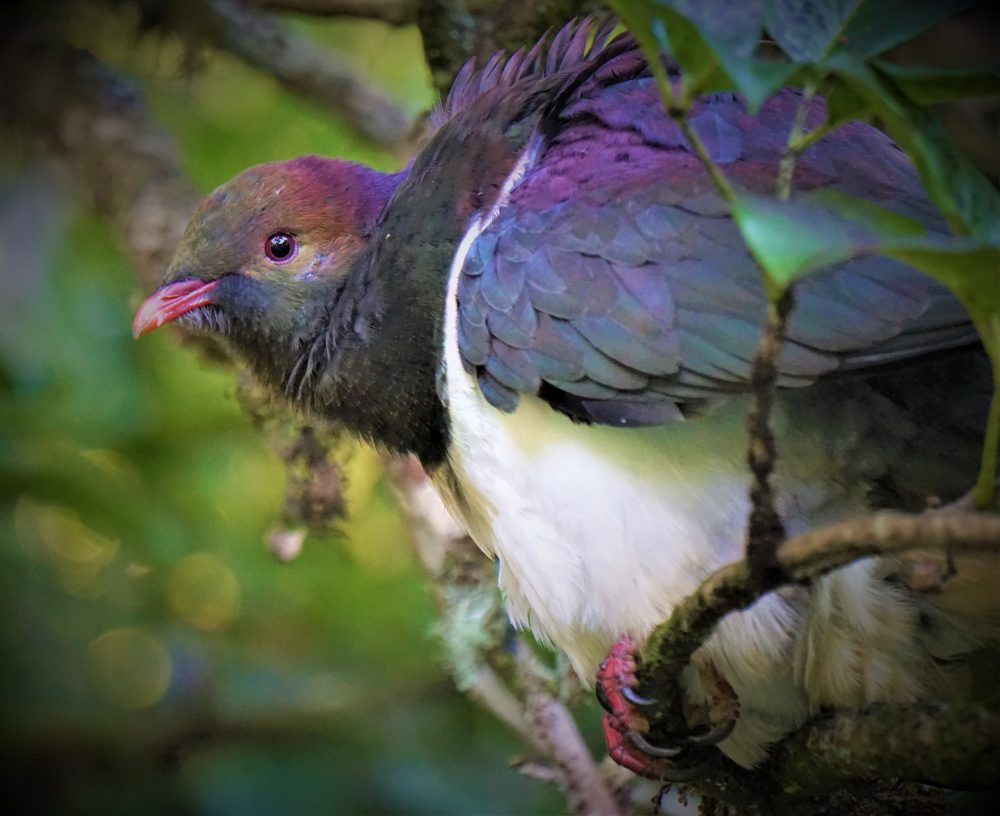
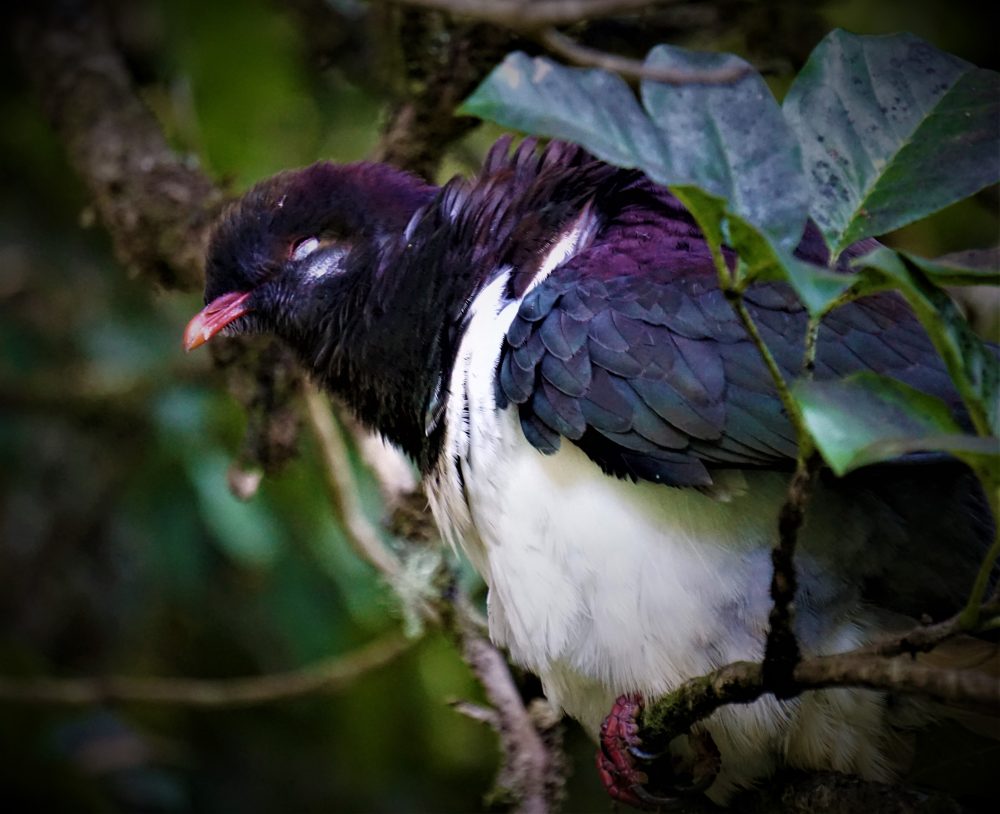
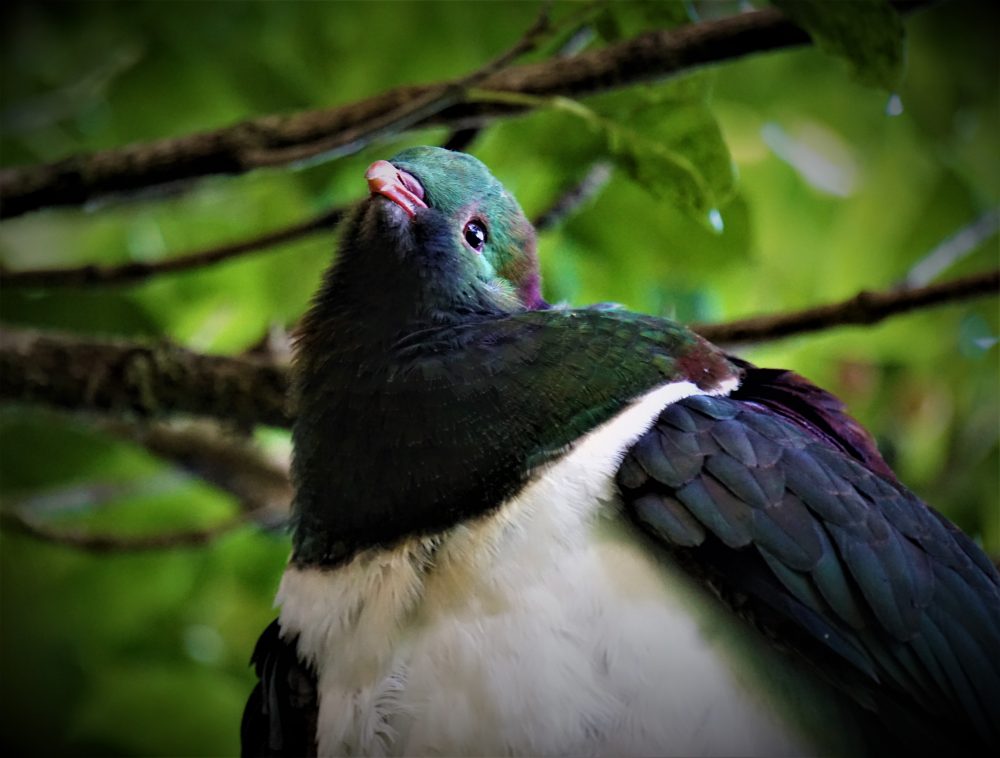
Kereru are big birds, in fact they are one of the largest pigeons in the world. They weigh about 650g and are 51 cms long. The feathers on their back and head are green, but can look purple in the sunlight. They have white feathers on their chests.

What does a kereru sound like?
Kereru don’t sing like a lot of our native birds, instead they make a soft “coo” sound. You are more likely to notice a kereru when it’s flying because of the loud “whooshing “ noise their wings make. They are clumsy at landing so if you hear a bird crash- anding in a tree– it’s probably a kererū. (listen to them cooing and crashing about the forest here)

Kereru families

Kereru can live for up to 20 years, so they aren’t in any hurry to have lots of chicks. Usually they will only have one each year, but if there isn’t enough food around they might not have any!

During spring and early summer male kereru have to work hard to impress female kereru. They perform fantastic display dives by swooping steeply up into the sky, pausing and then quickly dropping back down towards the ground.

The adults make a nest – an untidy platform of sticks in a fork of a tree or in a tangle amongst some vines. They lay just one egg in the nest, which the male and female take turns to keep warm for a month before it hatches.

The chick grows fast so it needs a lot of food. Its parents make “pigeon milk” – a milky liquid made in the parent’s crops which is mixed up with squished fruit, it’s a bit like a fruit smoothie. This energy-rich food is fed to the chick for 40 days until it becomes almost as big as its parents and leaves the nest.

The parent’s job is not quite over yet. For two weeks the chick hangs around its parents, learning how to survive and sometimes begging for a bit of extra food when it is hungry.

Sometimes, when there is heaps of fruit in the trees, kereru will have two chicks. One large chick will be in one nest, while they make another nest and lay a second egg nearby.

Why are kereru important?

Kereru love feeding on big berries like these Tawa fruit.

Kereru spread the seeds of over 70 native forest plants, including kahikatea, rimu and nikau. After the moa became extinct, the kereru became the only native bird large enough to eat the big fruit of some of our important native forest trees like tawa, karaka, taraire, miro and puriri. They also fly long distances so can distribute seeds throughout the forest. After eating thefruits , the birds fly away and poo the seed somewhere else in the forest, along with some nutritious fertiliser! If the kererū went extinct there would be no bird able to spread these seeds in the forest which would be a disaster.

What are the threats to kereru ?

The number of kereru is getting smaller. The 4 main reasons are:

• Predation

The biggest threat to kereru are introduced predators. Many kereru eggs and chicks never grow into adults because they are eaten by rats, stoats, possums and cats. In some places over half the eggs and chicks get eaten. Stoats and cats also eat adult kereru. All this means that there aren’t as many kererū in our forests, parks and gardens as there used to be.

• Habitat Loss

Kereru live mainly in forest. Before humans arrived in New Zealand 85 percent of New Zealand was covered in forests. Humans burnt and chopped down large areas of forests to make farms, towns and cities and to use the wood for building and exporting. Now only 23 percent of New Zealand is covered in forest. That means there is less food for kereru, and less places for them to nest and live.

• Competition

Possums and rat don’t only eat chicks and eggs they also eat the fruit and leaves kereru like to eat. Without enough food kereru don’t breed or they can starve.

• Illegal Hunting

Kereru were traditionally hunted by Maori for its meat and feathers. They were easy to spear or trap, especially after they had a big feed. Kereru were also popular birds with European hunters in the 1800’s. Eventually hunting kererū was banned in 1921 to help save them. Unfortunately people still sometimes hunt kereru illegally, which could cause them to disappear from some parts of New Zealand.

• Other threats

Kereru get injured or killed when they fly into windows or get hit by cars as they swoop low over roads.

How are we helping kererū?

• Controlling pests

All over New Zealand the Department of Conservation and local conservation groups trap, poison and shoot pest mammals. This gives kereru, and other native plants and animals, the chance to breed without being eaten! It also means that rats and possums don’t eat as much of the fruit and leaves, so there is more food for the kererū which helps them have more chicks.

• Planting trees

Volunteers plant native trees and plants throughout New Zealand to create habitats for our native birds, insects and reptiles. For kereru people plant food trees like kowhai, tawa, tarire and puriri so kereru have plenty of kai.

• Preventing illegal hunting

Since 1921 it has been illegal to hunt kererū. If you are caught hunting kereru you can get fined up to $100,000 or you could be sent to prison for up to a year. In the mid-north and eastern Bay of Plenty local Maori have put a rahui on kereru. A rahui is a traditional Maori way of temporarily banning the hunting of an animal or use of a natural resource, like a lake, to help protect them.

What can you do to help kereru?

• Join a local conservation group to help trap pests or plant kereru habitat. Try your local Forest & Bird branch or Department of Conservation office.
• Encourage mum or dad to set up a trap to catch possums, rats and stoats in your garden. Your local hardware or farm supply shop will stock traps, or if you are really keen you can try one of these
• Keep your cat in at night, make sure it’s been desexed and put a bell on its collar to help reduce the number of birds it catches. Or you can consider being a cat-free home.
• Plant kereru food trees in your garden like tawa, kowhai, puriri and hinau. Make sure they aren’t too close to windows so the kereru don’t crash into them! For more plant ideas click here
• Reflections of trees in windows can confuse kereru into thinking it’s just more forest, so they try to fly through it which can injure them. Try putting some stickers on the windows to let them know it’s not bush!
• If you find a sick or injured kereru, get it to your nearest rescue centre as soon as possible or call the Department of Conservation on 0800 DOCHOT. To catch a kereru throw a towel over it, scoop it up and put both bird and towel in a box. The darkness of the box and the warmth of the towel helps the bird if it’s stressed. For bird rescue information click here.