Report by: Tasman and Bodhi.
Last month, Forest & Bird celebrated 100 years of conservation by throwing a Big Birthday Bash! The fun day was held at Shakespear Park in Tāmaki Makaurau Auckland on the 17th of February 2024. Pest Free Hibiscus Coast Project, the Hibiscus Coast branch of Forest & Bird, volunteers, local community, and families joined for a day of fun nature-themed activities, picnic and cake.
When we arrived, there were lots of tables set out with activities that you could join, magazines, stickers, traps, games and more.
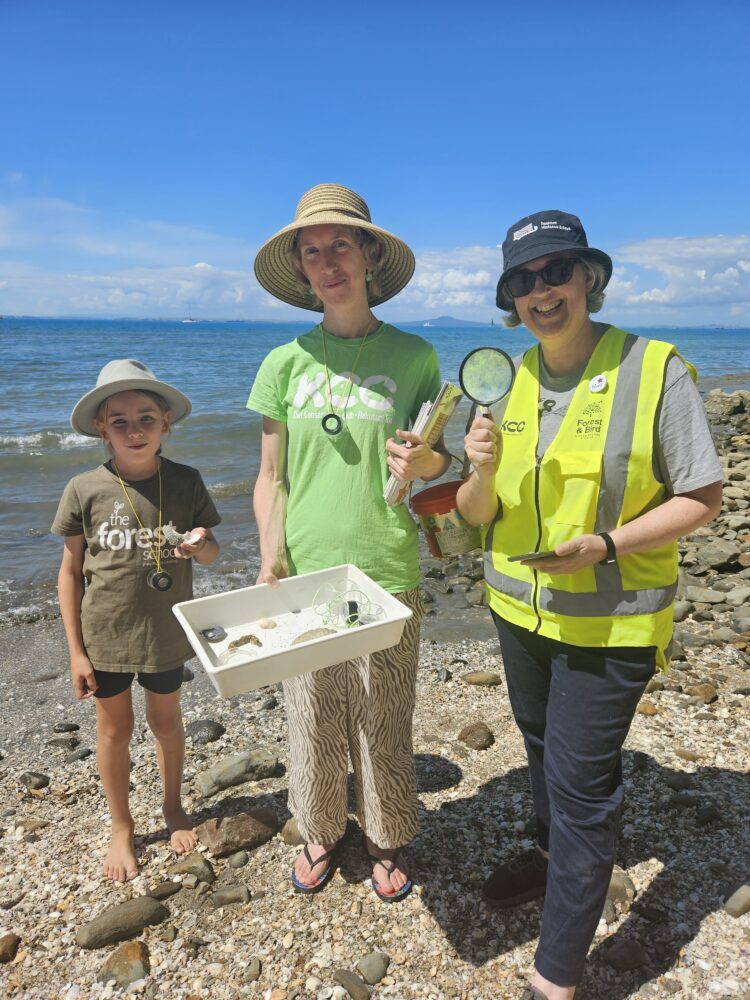
One of the activities was Rockpool Exploration. We found crabs, kina shells, scallop shells and more with magnifying glasses and our eyes. We even picked up an old fishing hook and a scooter handle grip to go into the rubbish.
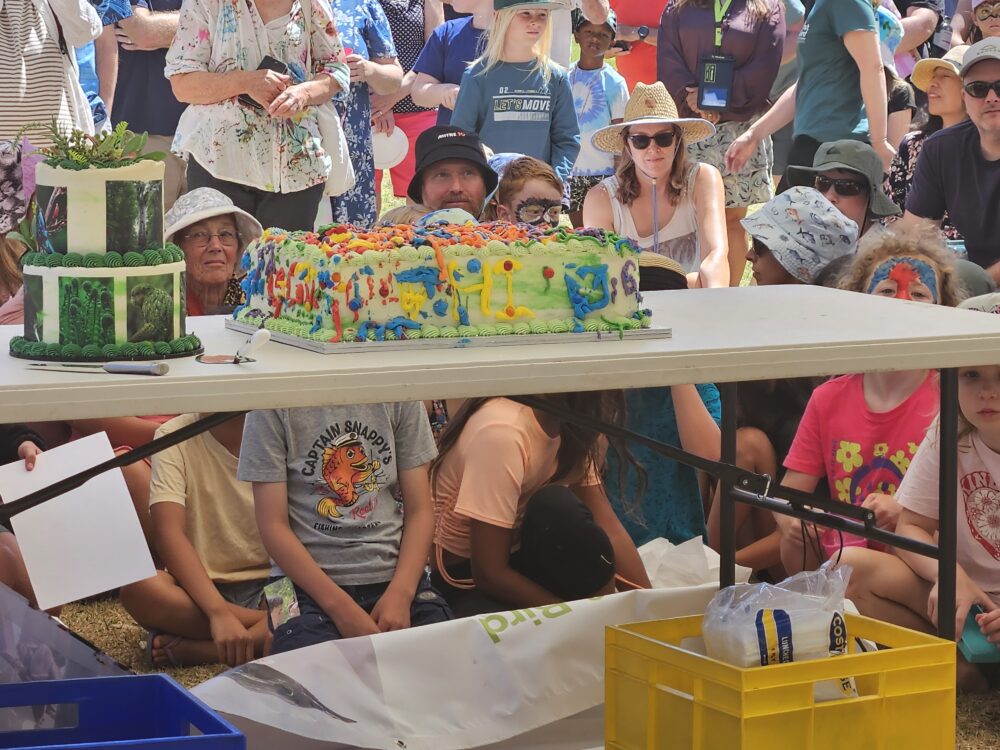
There was a cake cutting ceremony. Kids got to decorate a big cake and then there were some speeches, and everyone got a piece of cake.
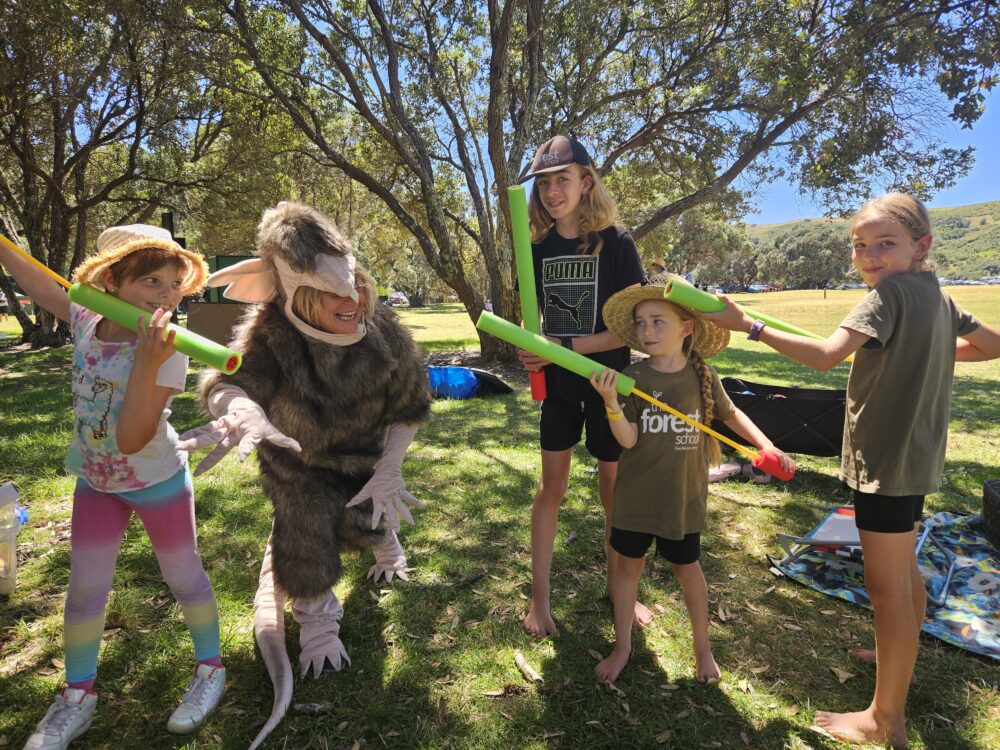
We had a water fight against rats that were trying to steal eggs from the nest. We had to defend the nests and eggs with our water guns. We won against the rats!
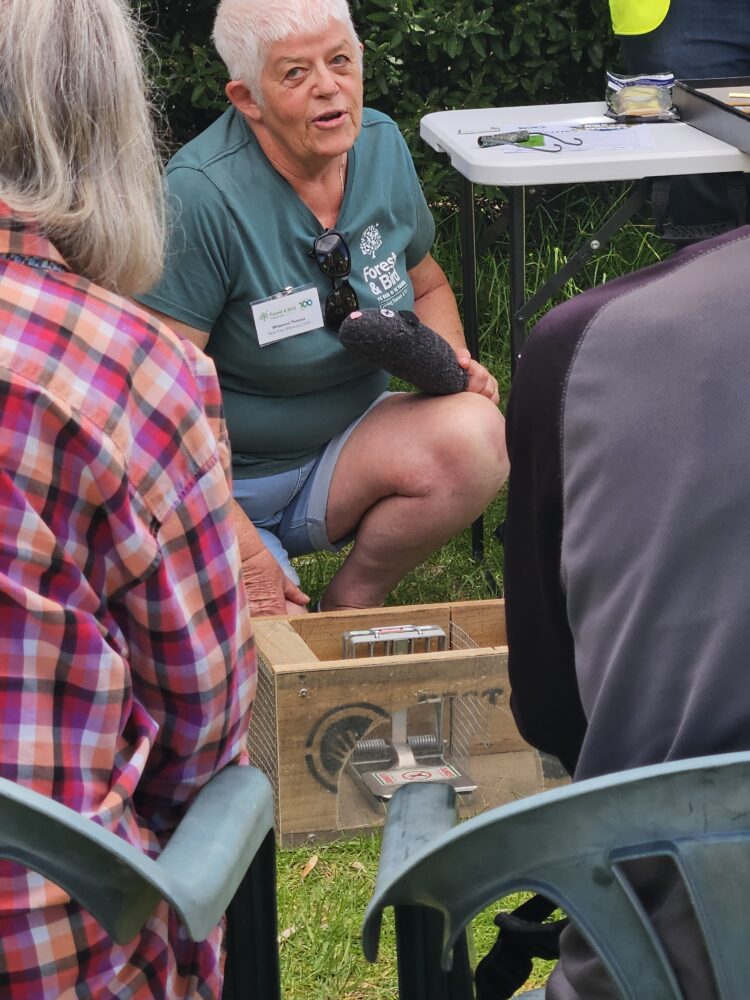
Rhiannon from Pest Free Hibiscus Coast gave a talk on ‘Trapping in Urban Areas’ and was showing how traps work and how they trap pest animals like rats and stoats.
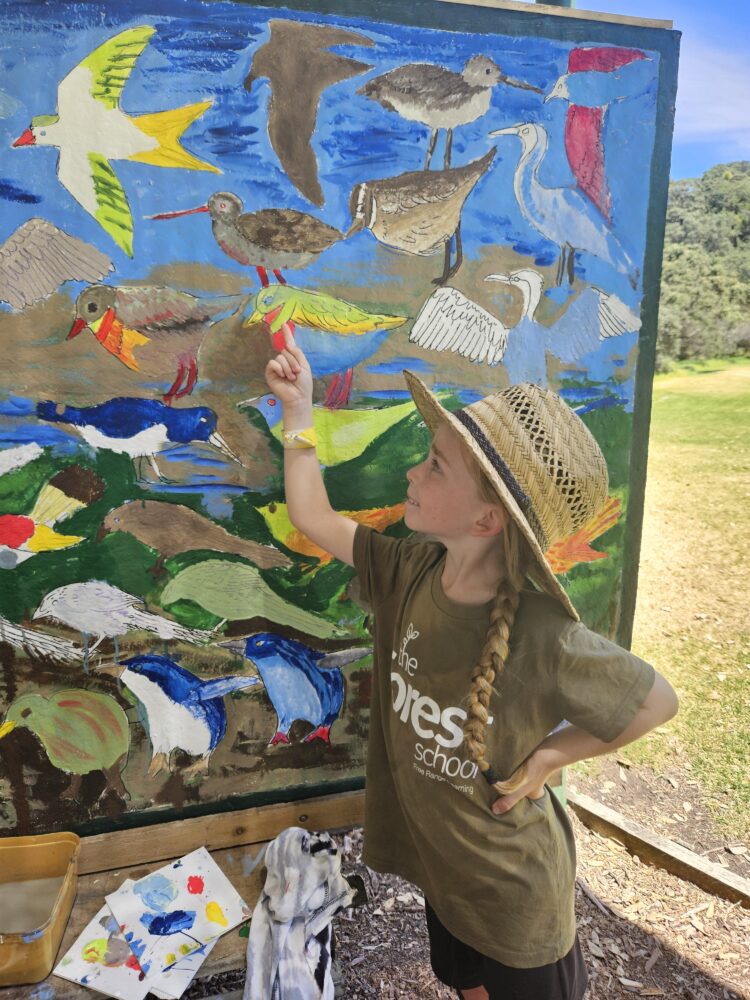
There was a mural of birds, that you could choose a bird to paint. The mural is going to be displayed on a fence near Shakespear Park.
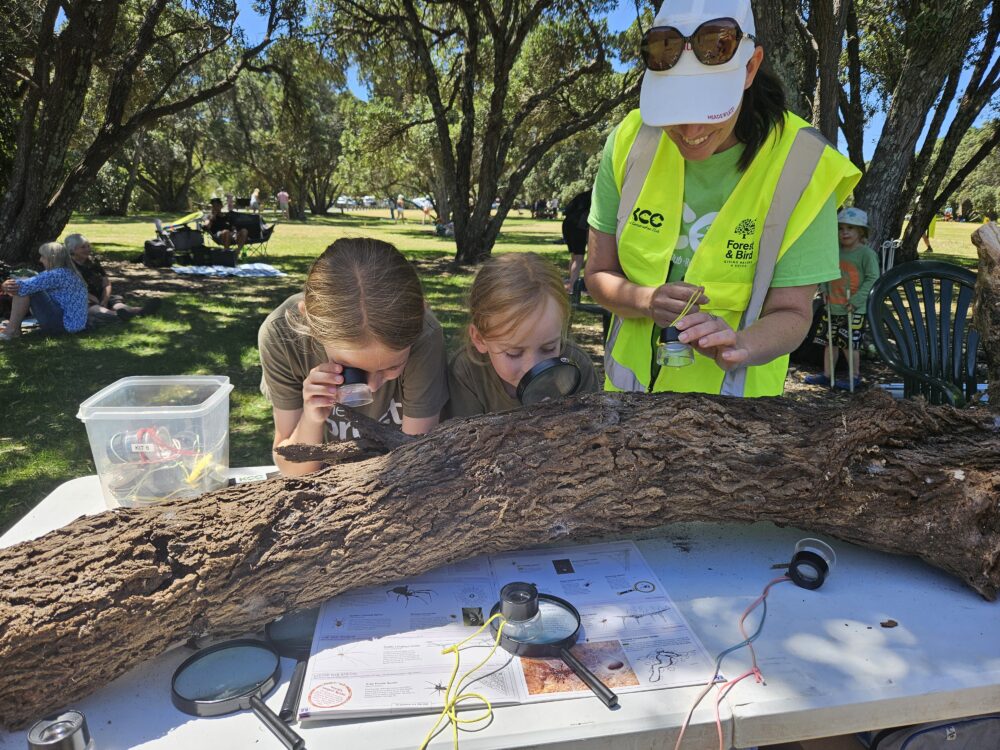
We met our local Kiwi Conservation Club Coordinator (KCO) and looked at what was in an old log, and she gave us free magazines and stickers.
We also played the Fish Migration Game, won Forest & Bird t-shirts, and joined walks to see the protected baby dotterels and oystercatchers on the beach with other families. We learnt about takahē.
It was a fun day out for everyone, and we met lots of friendly people.